
Behind the scenes
How a treasure hunt works on board
Sealed letters, coded charts, a traitor in the crew and a chest at the end. Here is how our skipper-animators build a treasure hunt that works for a six-year-old and a sixty-year-old on the same boat.
“So, is it a boat trip or a game?” We hear this question a lot. The honest answer is both. Every Uncharted tour is a real day (or week) on the Adriatic, with swimming, sailing and long lunches. But running through it is a story that you and your crew play in. Here is how it works, from the first sealed letter to the last clue.
It starts with a real story
Every quest is built on something true, or at least something people here have believed for a very long time. Queen Teuta really did fight Rome from these islands. The Omiš corsairs really did hide in the Cetina canyon. Monks really did carve a dragon into a cave on Brač. We start with the history and the local legends, and then ask: what if there was one more chapter, and our guests got to write it?
The skipper is also the game master
Every Uncharted skipper is also an animator. That means two jobs at once. The first never changes: they are a licensed skipper responsible for the boat, the weather and everyone’s safety. The second is the fun part. They tell the story, play the characters (Poseidon, a Kačić captain, a suspicious envoy from Rome), hand out the clues and keep the game moving.
When the sea needs attention, the game waits. When the sea is calm, the game is everywhere.
Roles for everyone
A good quest has to work for a six-year-old and a sixty-year-old on the same boat. So each guest can take a role, and each role holds part of the solution:
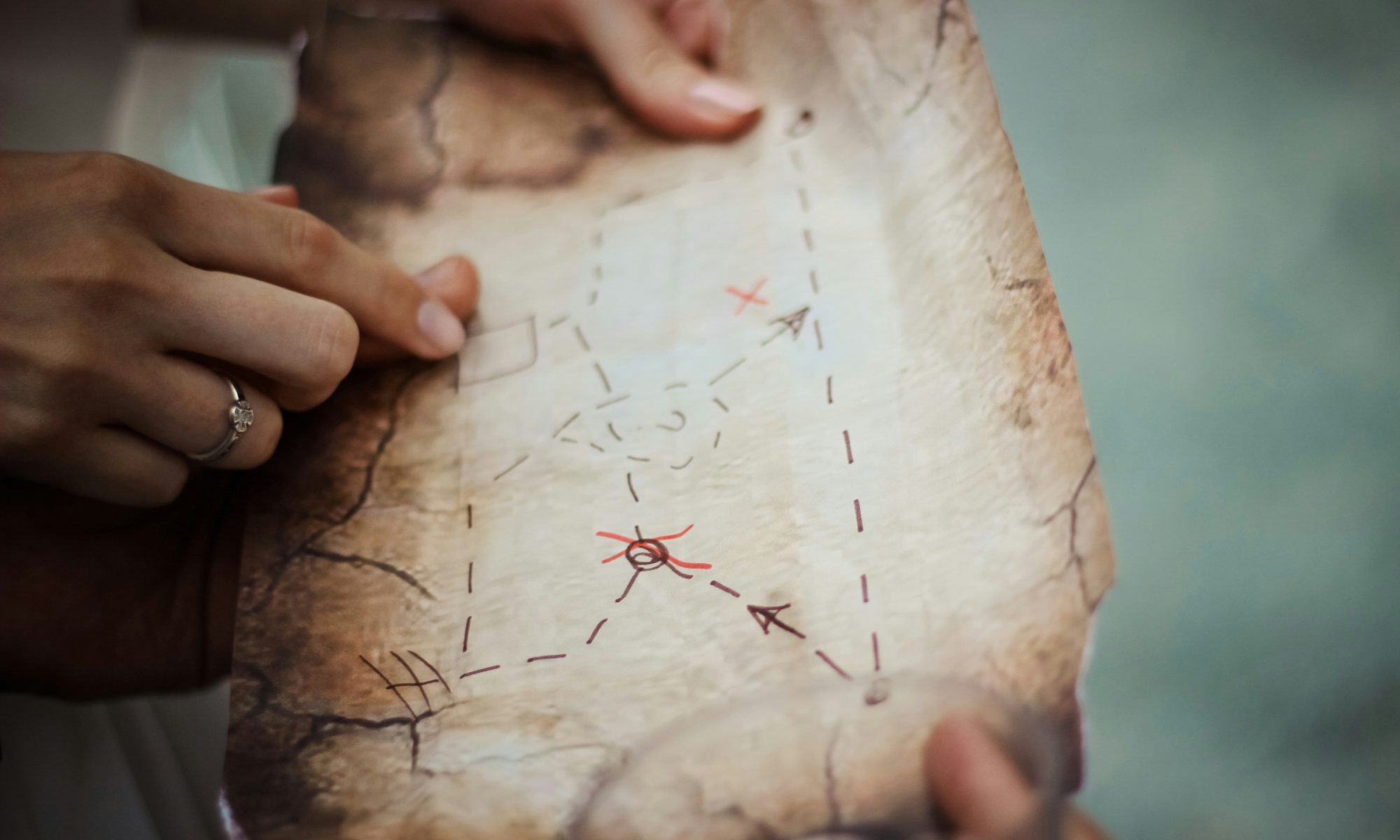
- The navigator reads the hand-drawn charts and finds the next anchorage.
- The quartermaster keeps the clue log and the treasure accounts.
- The lookout spots the signs on shore: a mark on a stone, a flag on a buoy.
- The envoy does the talking when the crew needs something from a local (a story, a hint, sometimes just directions to the best ice cream).
Prefer to watch from a sunbed? That is a role too. We call it “ship’s cat”.
What the clues look like
Clues come in every shape: a sealed letter opened at dinner, a cipher in Greek letters, a picture puzzle on a beach, a set of coins lying on a sandy bottom, signal flags on a chapel wall, a sound recording played on deck at night. Some you solve with your head, some with your eyes, some with a snorkel.
The best clue is the one that makes you look at a real place in a new way.
Challenges, not competitions
There are challenges along the way: steer the boat through a strait, defend your cargo in a water-pistol boarding, row ashore to a lookout. They are built so that everyone can join in and nobody gets left out. On week-long voyages there is usually a twist halfway through, such as a traitor in the crew. We won’t say more.
Safety comes first, always
- Every swim stop and every challenge depends on the weather and the sea. The skipper decides, and the story adapts.
- Clues are never hidden anywhere dangerous: no cliffs, no deep caves without the skipper, no climbing on private property.
- Life jackets in all sizes are on board, and children are supervised in the water.
And the treasure?
There is always a treasure. Sometimes it’s a chest on a beach, sometimes a prize that’s best eaten, sometimes something you take home and put on a shelf. What it is depends on the tour and on the crew. We’ll leave it at that.
Want to see it for yourself? The Treasure of the Blue Lagoon is the easiest way in for families, and In the Footsteps of Queen Teuta is the full week-long quest.